Unbottled – European Sparkling Wine
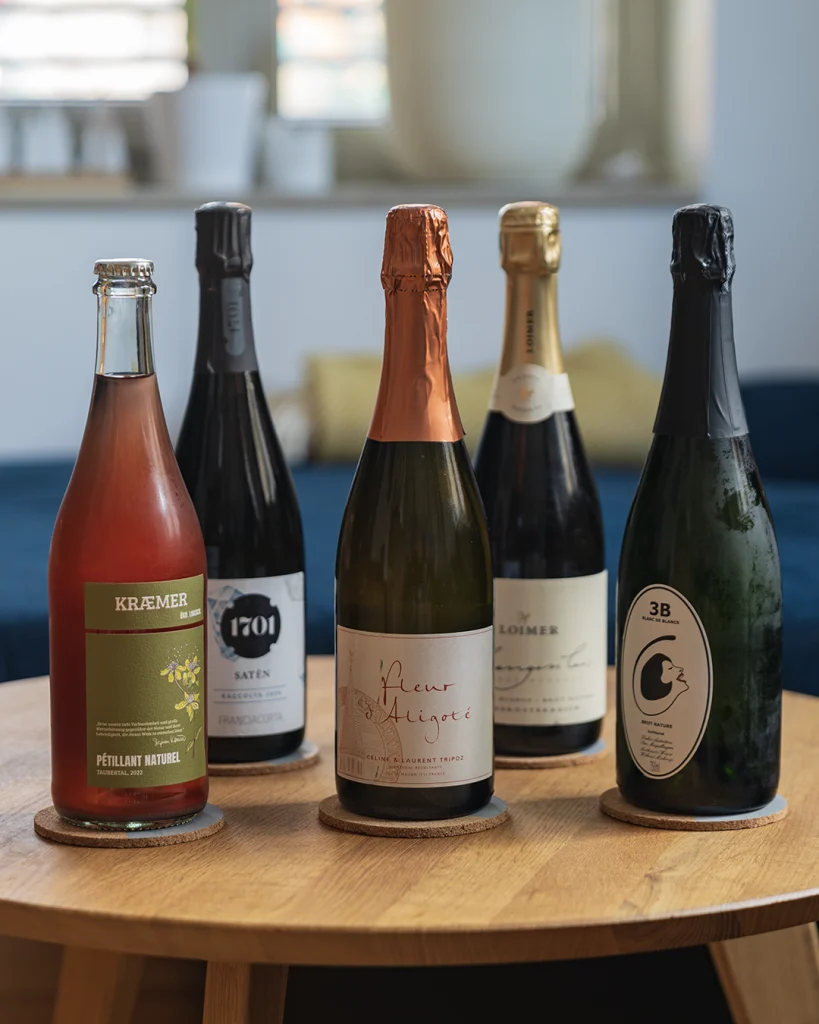
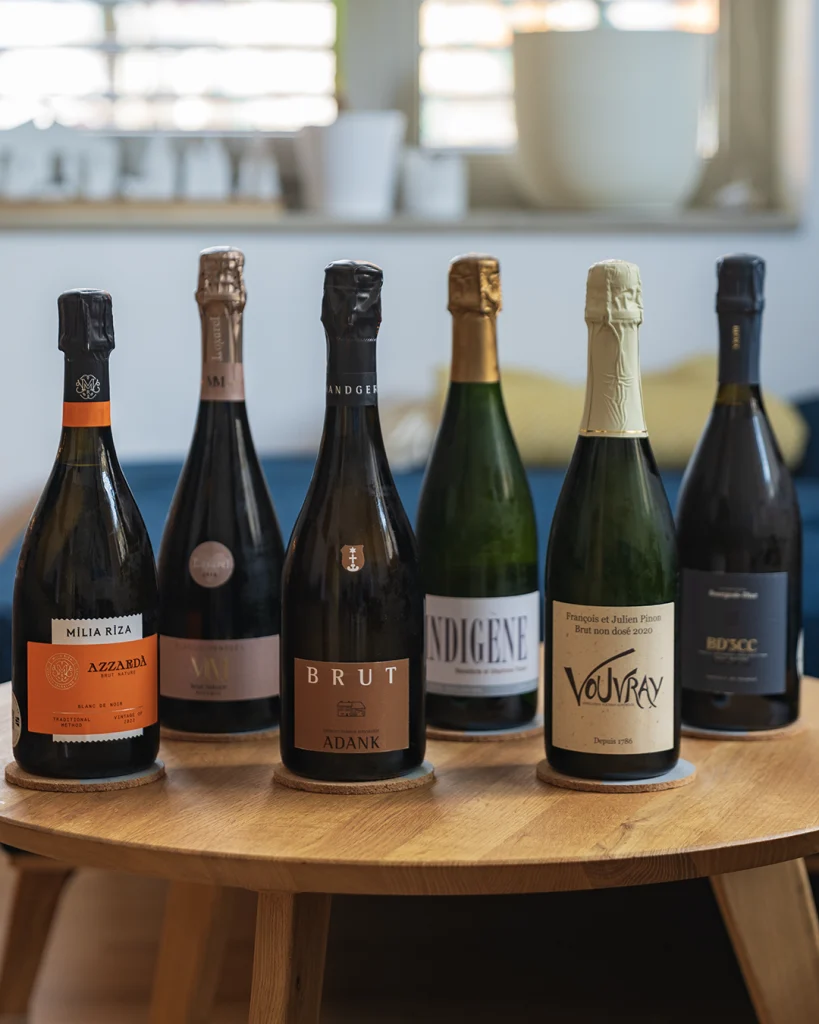
Last year we started the tradition of tasting sparkling wines right before Christmas. What better time of the year to do that? This year we took a closer look at sparkling wines from all over Europe. Some countries, especially France, have a long tradition of producing them, others are relatively new to the game. Nevertheless, it was fun to explore all the different styles.
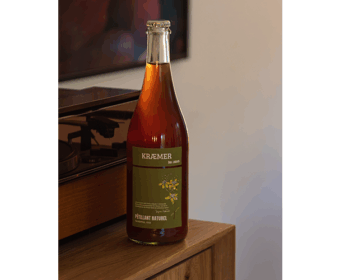
We started with the wild-card in the tasting from Stephan Kraemer. While his Pet Nat Rosé-Weiss is bottle fermented it is sold as a semi-sparkling wine. The Franconian wine inspection did not allow him to use a crown cap on a wine with the pressure of a regular sparkler. So, Stephan bottled the fermenting wine with less residual sugar to end up at the semi-sparkling level. Apart from that, the wine consists of around 70 % Regent and 30 % Bacchus. Naturally, the wine is unfiltered and unfined with a minimal dose of sulphur.
Funky red grapes
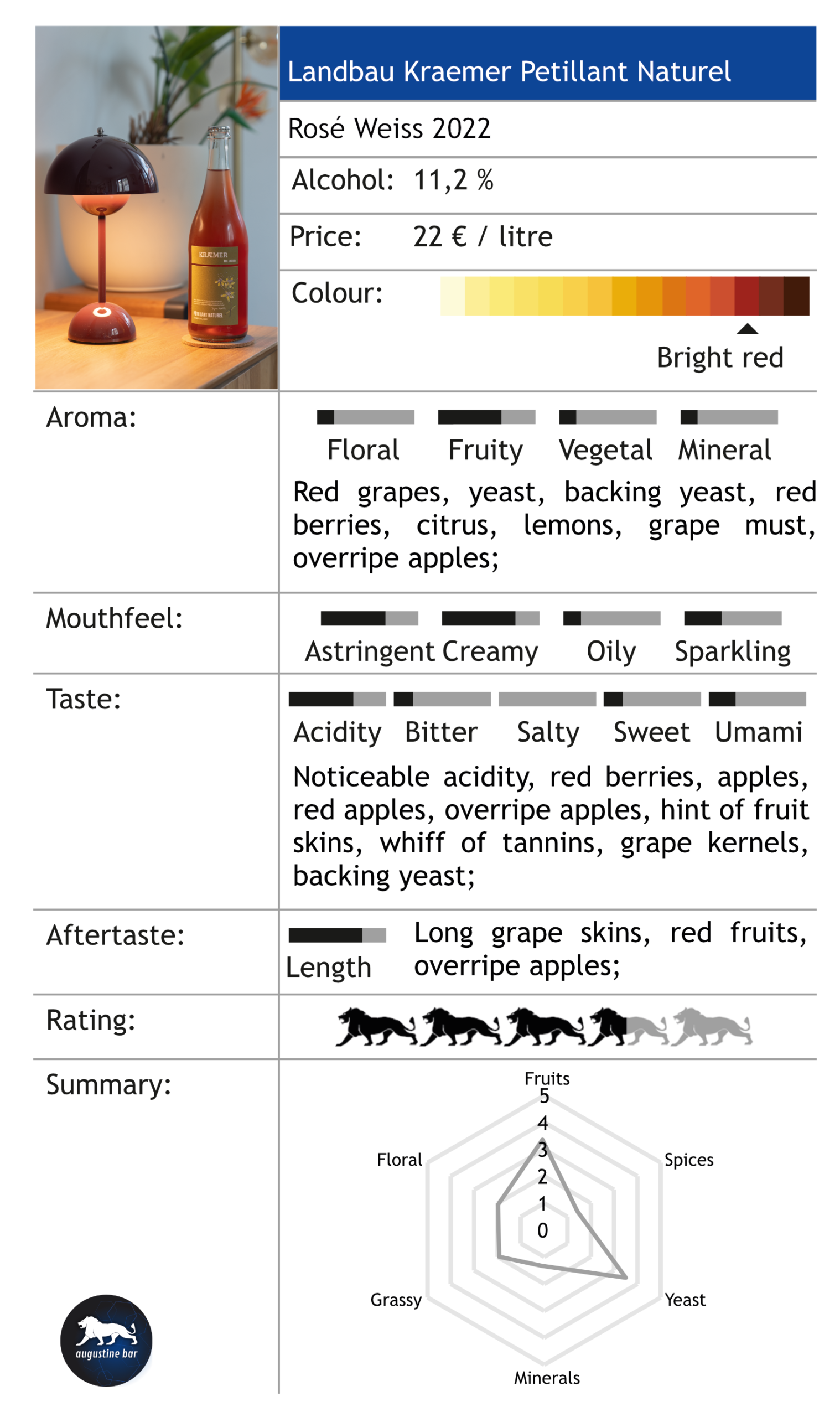
This is the rare case that I know a wine in a tasting beforehand. As I mentioned in my article on the Kraemer vineyard visit, I again noticed a hint of tannins and grape skins. Apart from that, I got some red fruits in the form of red berries, overripe apples as well as some grape must flavours. The yeast flavour is pronounced, but well integrated. This definitely was a Pet Nat that most of the tasters enjoyed.
Céline & Laurent Tripoz Fleur d’Aligoté
After the Aperitif so to say, we started the regular part of the tasting with a fresh Aligoté sparkling wine from Céline & Laurent Tripoz. They farm their vineyards biodynamically and harvest in small crates by hand. After a static sedimentation, the wine ferments in stainless-steel where the malolactic-fermentation occurs. Afterwards, the Tirage is done with selected yeasts from the vineyard and the Aligoté spends at least six months on the yeast in the bottle. In the end, the wine is slightly filtered, not fined and no sulphur is added.
Grassy refresher

The Fleur d’Aligoté had a surprising amount of yeast notes for just above six months of bottle ageing. Besides a noticeable acidity you could find some spicy and grassy notes. On top of that, I notice some green apples as well as chalk. This way it was quite well received by the participants.
Filipa Pato & William Wouters Espumante 3B
We compared the Aligoté with the Filipa Pato & William Wouters 3B from Portugal. The three bs stand for the three autochthon white grape varieties Bical, Maria Gomes as well as Cercial. They grow on chalky soils at higher altitudes. After the spontaneous fermentation in stainless-steel the wine spends nine months on the yeast in the bottle. All in all, the 3B is neither filtered, nor fined.
Funky fruit cup
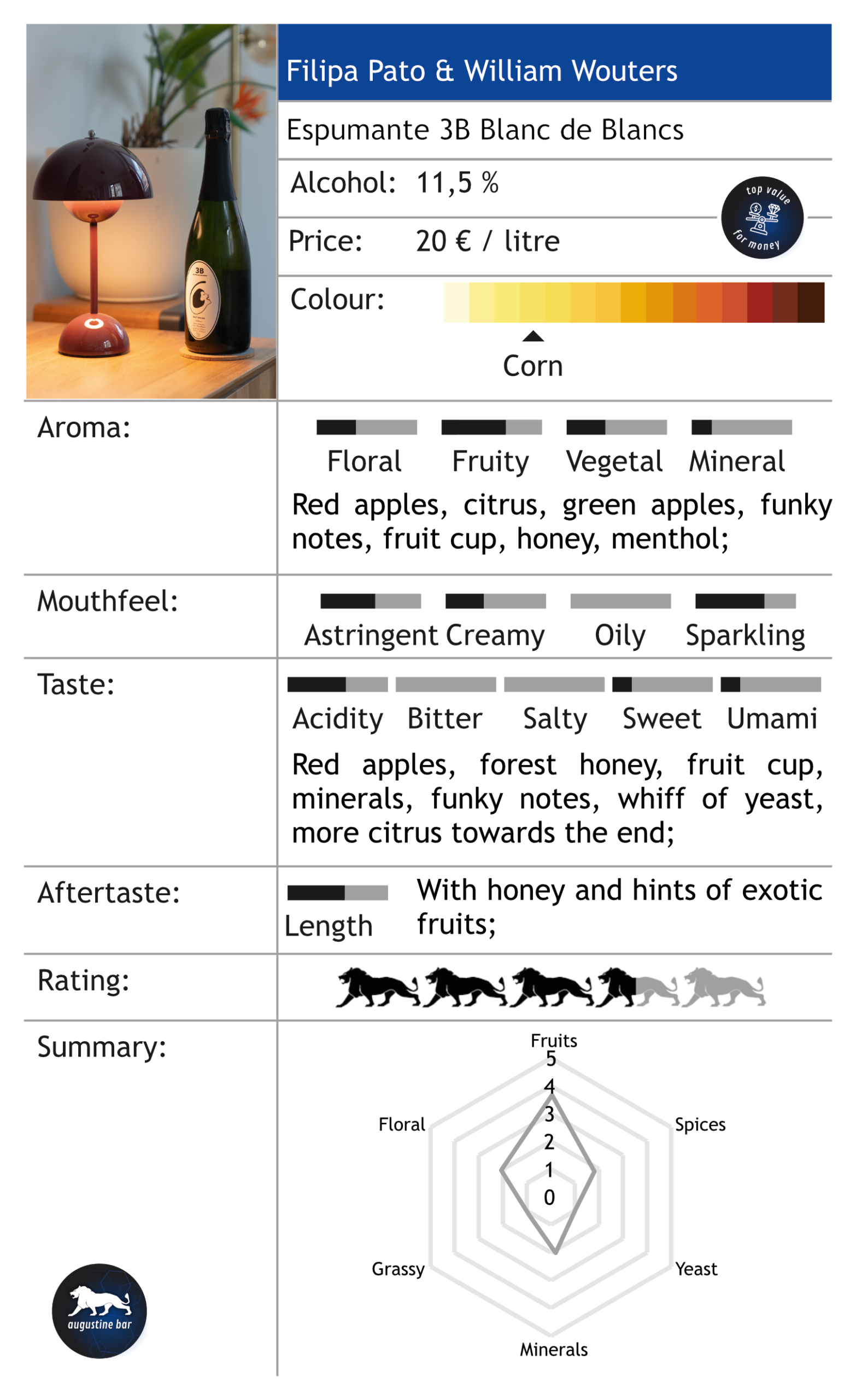
Obviously, I was not familiar with the grape varieties of the 3B. However, it definitely was an intriguing flavour combination of red apples, fruit cup and honey. In direct comparison this Portuguese sparkler was more complex than the Aligoté. Apart from that, if you take into account the price, it is also great value for money.
1701 SRL Franciacorta 1701 Brut Satèn
The next flight continued with Blanc de Blanc sparkling wines. The first one was a Franciacorta from 1701 SRL. I decided to go with the Brut Satèn Millesimato 2020, because the bottling at a lower resulting pressure of 5 bar intrigued me. Furthermore, the grapes for the Satèn come from 1701’s oldest Chardonnay vineyard called “Sabbioni”. After spontaneous fermentation in 75 % stainless steel and 25 % used French barriques the wine spends over 30 months in the bottle for the second fermentation. 1701 does not filter, nor fine the wine and also does not add any sulphur.
Less pressure

Apart from the obvious more pronounced yeast and Brioche notes of the Satén, the lower pressure really results in a smoother mouthfeel. Apart from that, you will find honey, citrus and a pronounced minerality. This way, the Millesimato was one of the favourites of the tasters.
Fred Loimer Langenlois Große Reserve
After the Franciacorta, we tasted the Austrian Langenlois Grand Reserve from Fred Loimer. While this is also a Blanc de Blanc, the Cuvée consists of 60 % Chardonnay, 36 % Pinot Blanc and 4 % Pinot Gris. Around half the grapes come from 2018 and are vinified in stainless steel and the other half from the 2019 vintage in large oak barrels. The wine spends 12 months on the yeast as well as eight months on the lees. After the second fermentation, the sparkling wine spends 36 months on the yeast.
Complex and different
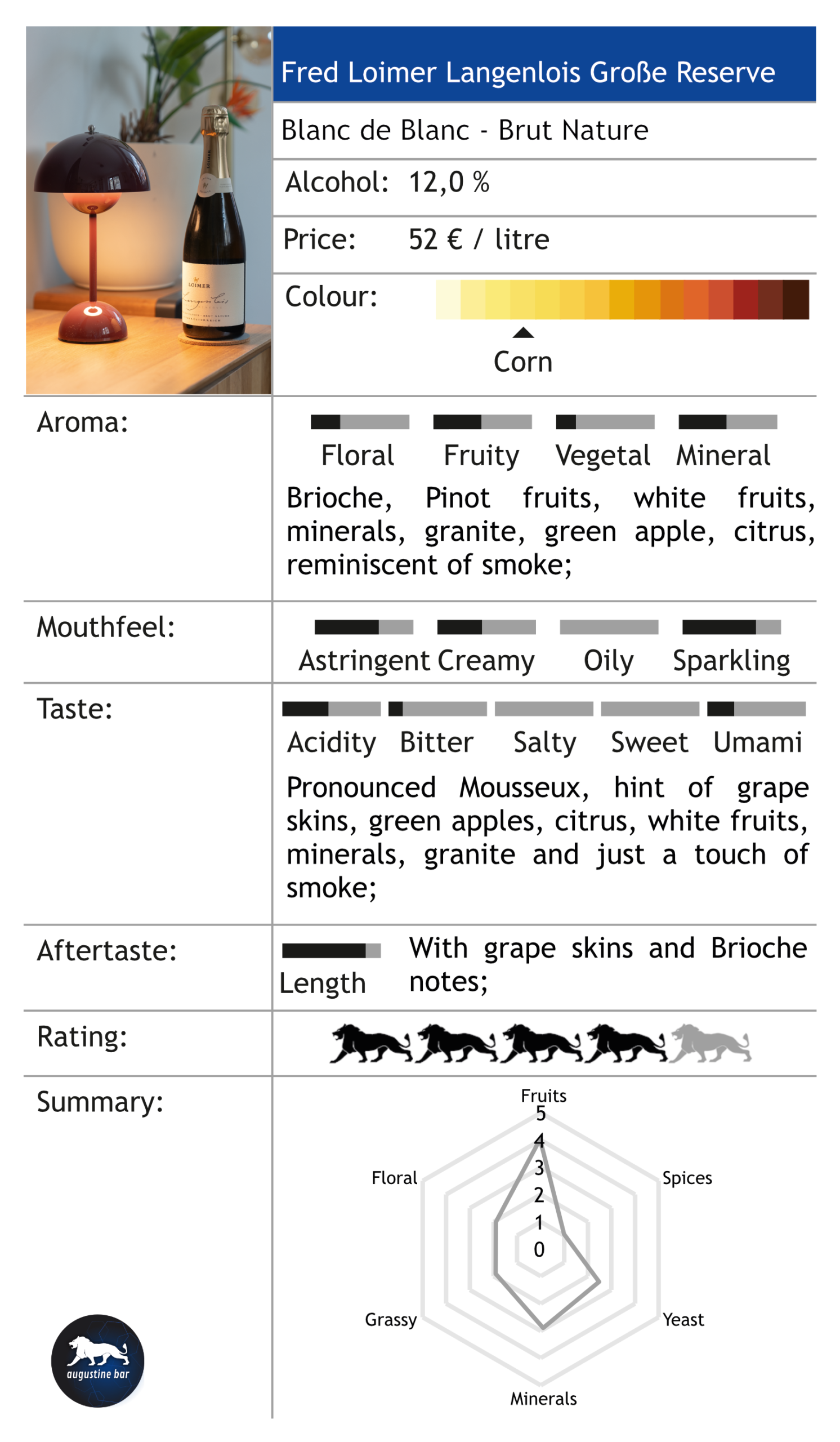
While the Langenlois Grand Reserve mainly used Chardonnay, too. The overall tasting experience was still different. The wine felt riper with a hint of Pinot fruits. Yet, there also were flavours resembling granite, smoke and a touch of grape skins. Overall, it was very tasty and received the second highest rating.
Milia Riza Blanc de Noirs Azzardà
Next up, we compared two Blanc de Noirs. I was very curious to try the Milia Riza from Greece. The bottle uses the autochthon Agiorgitiko grape variety. After the manual harvest, the grapes are chilled to 5 °C, pressed and cold sedimented. The fermentation with selected yeasts is done at 17 °C in stainless steel. Subsequently the second fermentation takes place in the bottle and the sparkling wine ages for 24 months on the yeast.
Best Greek wine so far
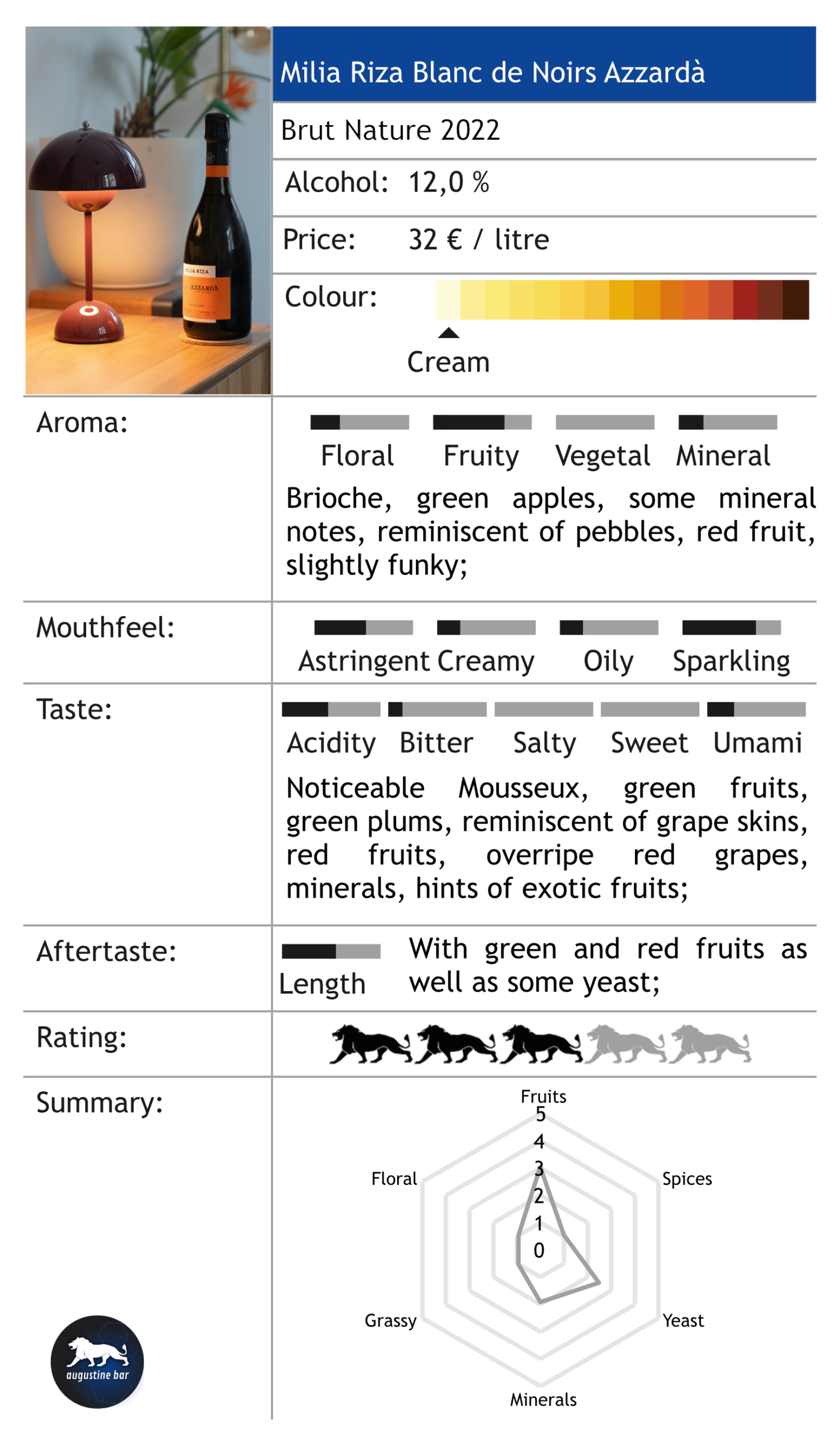
I was very intrigued to see how the Milia Riza would perform and it is fair to say, that it did not disappoint. Yes, the taste of the Agiorgitiko is something you need to get used to. However, the sparkling wine also showed a pronounced acidity, notes of green apples, Brioche as well as red fruits. It is fair to say that this was the best Greek wine I tried so far.
Hansruedi Adank Brut
In contrast, we tried the Adank Brut from Switzerland. Coincidentally, this wine was only recently featured in a Bavarian tv show I like to watch. The pinot noir grapes from old vines spend 10 months in stainless steel as well as used barrique barrels after the spontaneous fermentation. The main part of the wine comes from the 2020 vintage while the remainder consist of a Solera started in 2014. The Brut ages for over 30 months in the bottle.
Complex red fruits
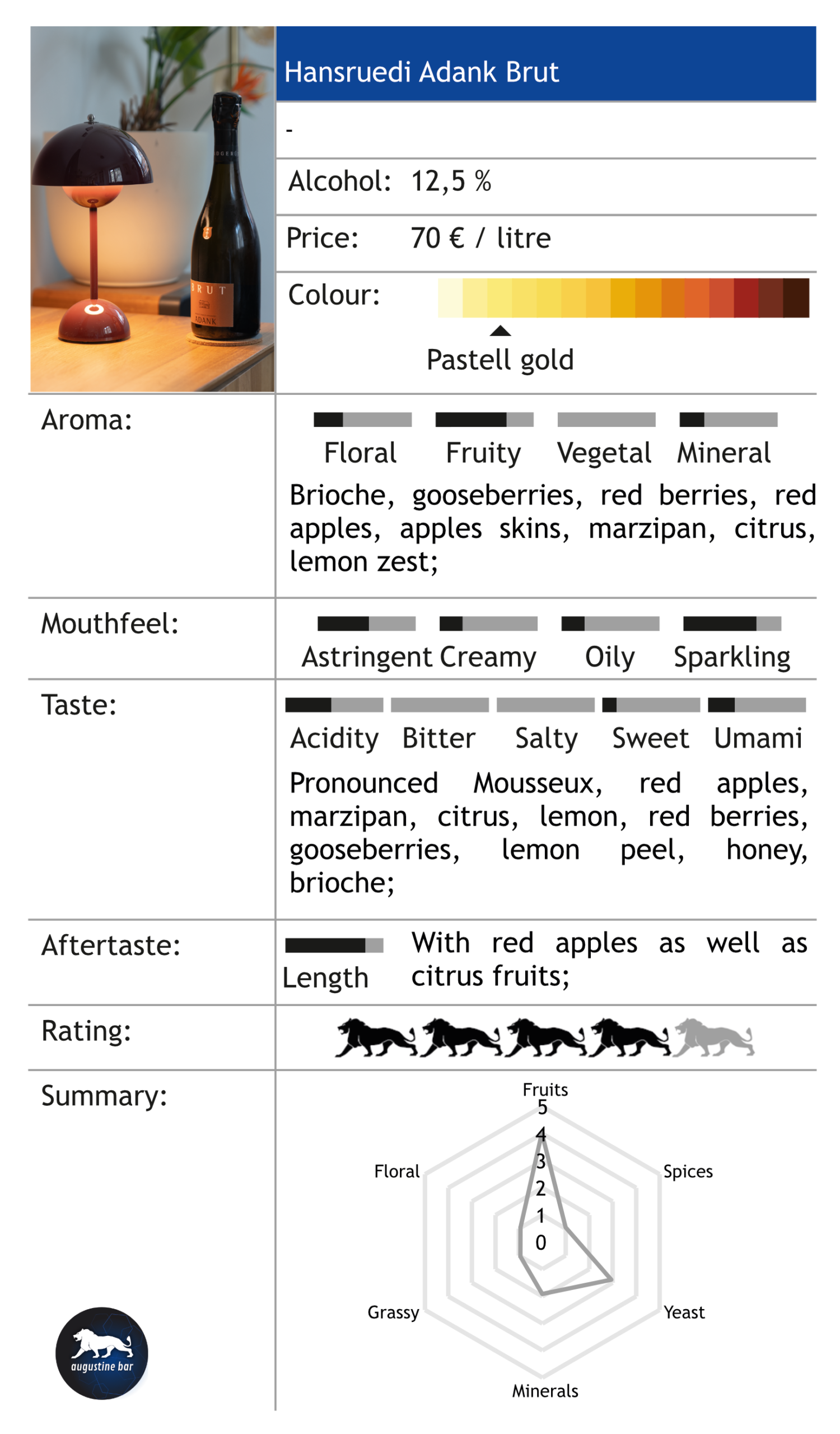
The Adank Brut starts with the obligatory Brioche and yeast notes. Yet, after a short while red fruits emerge. There is a beautiful combination of red apples, red berries and gooseberries. In the aroma as well as in the taste I found some marzipan flavours, too. The aftertaste, is quite long with red apples and citrus.
François et Julien Pinon Vouvray Brut Non Dosé
We continued with thrown together flight of a Crémant de Loire as well as a Cava from Spain. First up, the François et Julien Pinon Vouvray Brut uses Chenin Blanc grapes from old vines harvested slightly later than for their “Brut” bottling. After fermentation in stainless steel and a few months of ageing, the sparkling wine ages for 42 months on the yeast. The wine is slightly filtered, but unfined.
Crisp, but strict
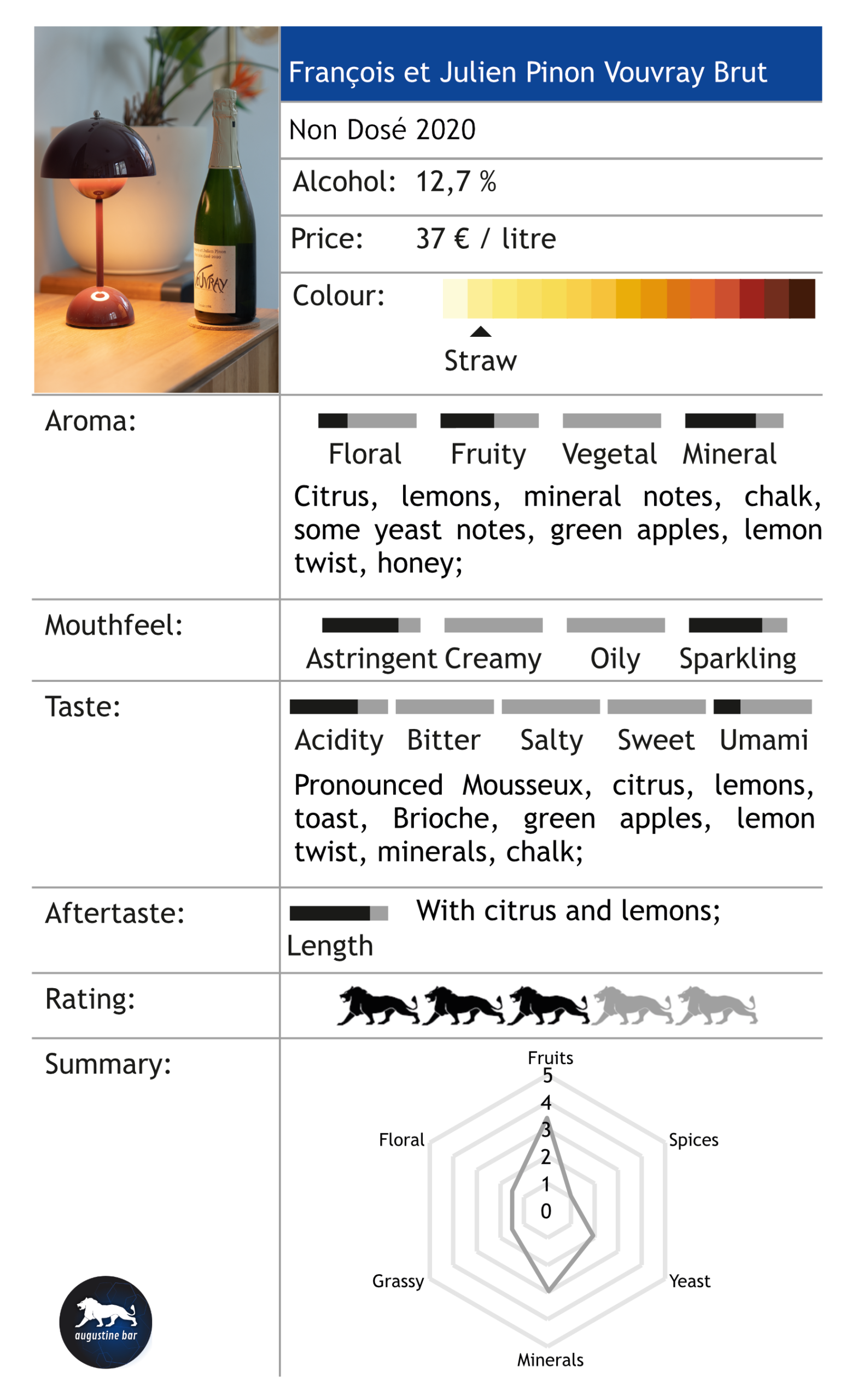
The Vouvray Brut is a crisp and focused sparkling wine. You will find quite the pronounced acidity accompanied only by a little fruit reminiscent of green apples and citrus. There are some autolytic notes, but they tend more towards toasted bread for me. Behind it all there lies a certain minerality which reminded me of chalk. This way the wine was a bit too austere for some tasters.
Loxarel Vitivinicultors MM De Loxarel Classic Penedès Brut
The Loxarel Vitivinicultors MM consist of Pinot Noir and red Xarello grapes. After the selective harvest, the grapes are quickly pressed. Fermentation takes place naturally in stainless steel as well as the ageing of the base wine. The sparkling wine then spends six years in the bottle. All in all, the bottle is unfiltered, unfined and no additional sulphur was added.
Rosé bubbles

In direct comparison with the Vouvray Non Dosé, the rosé from Loxarel almost felt “sweet”. Nevertheless, you were greeted by a lot of red fruit notes reminding me of strawberries as well as red gooseberries. You definitely notice the long bottle ageing on the yeast. Yet, there still was enough freshness and the Mousseux also was well integrated despite the disgorgement in October 2025.
Stéphane Tissot Crémant du Jura Indigène
The last flight in the tasting, were two sparklers from France. The first comes from Stephan Tissot based in the Jura region. This combination of 50 % Chardonnay, 40 % Pinot Noir, 5 % Poulsard as well as 5 % Trousseau shows the potential of grape varieties from the region. After fermentation in stainless steel as well as some used oak barrels the base wine spends additional three months in the vessels. The special thing about the Indigene is the use of grape must for the second fermentation instead of selective yeasts and sugar.
Divided opinions
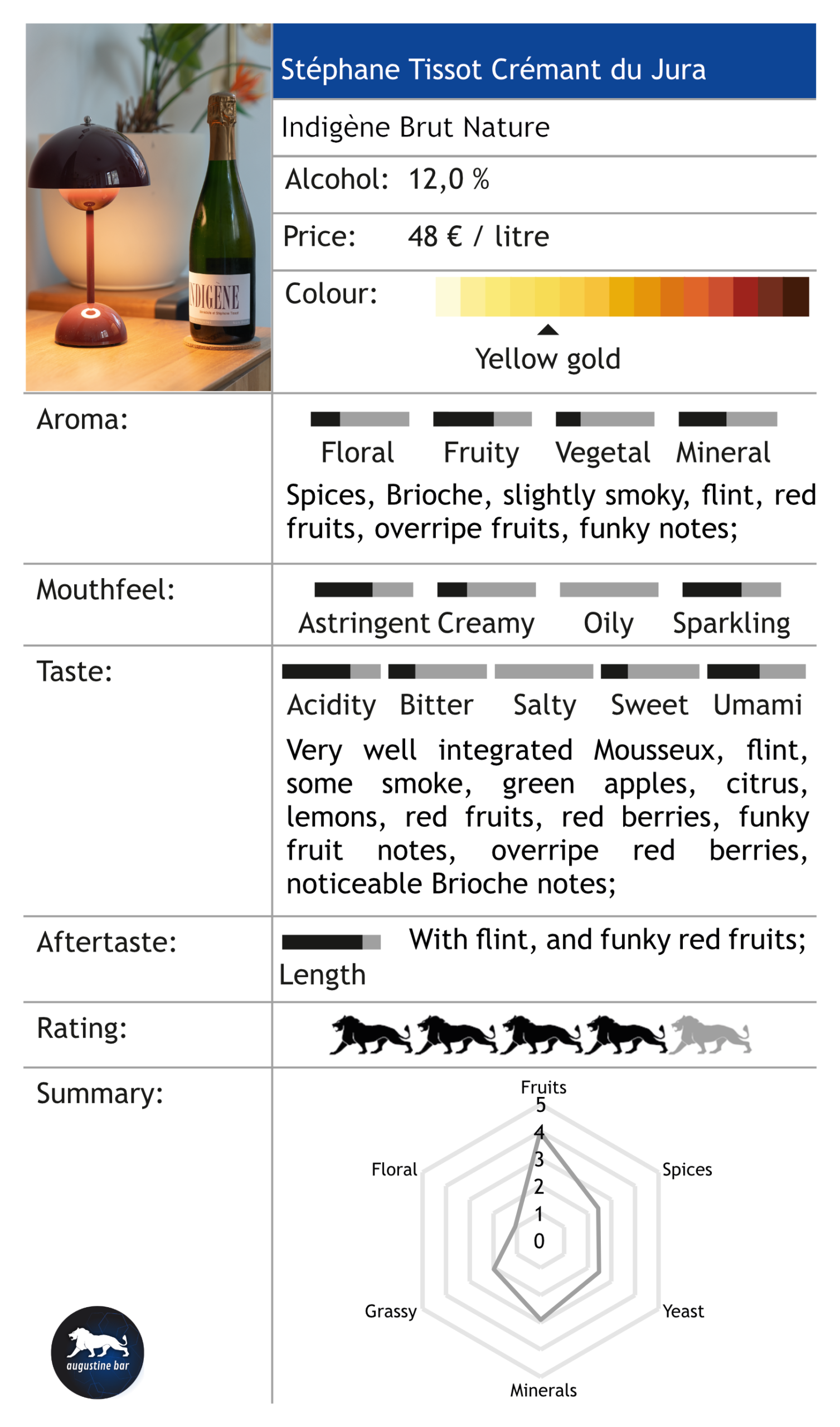
When it comes to the Indigene, opinions differed. Some, including me, enjoyed the sparkling wine very much. The first thing you notice are some reductive notes, but they are well balanced by a funky fruitiness as well as some acidity. However, this is exactly what others did not enjoy when it comes to this wine. Nevertheless, I rated this one quite high.
Bourgeois Diaz 3CC trois cepages collection 2017
Obviously, there had to be a bottle of champagne in the tasting. We had a glass of Bourgeois Diaz 3CC 2017. The cuvée uses 35 % Chardonnay, 35 % Pinot Meunier, 30 % Pinot Noir from fifty-year-old vines. The base wine ages in stainless steel as well as used oak barriques. After the second fermentation, the 3CC spends 65 months in the bottle before disgorgement.
Highlight of the tasting
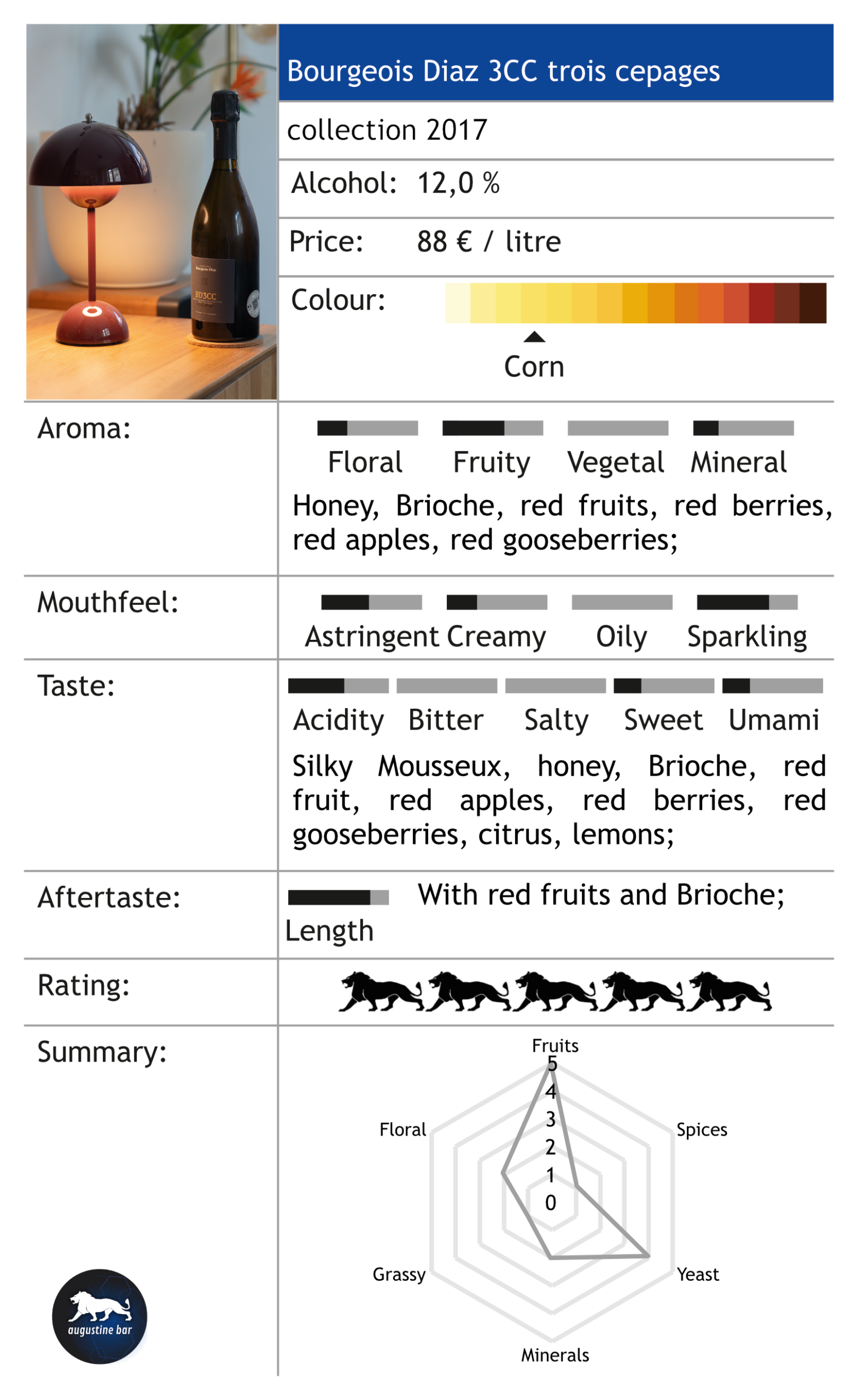
Well, the 3CC did not disappoint! It delivered everything you could ask for from a champagne, brioche and honey notes, red berries and an acidic backbone. At the same time, you do not even notice that this one is bone dry. It was the highest rated wine in the tasting and also my favourite.
*The fact that I received a product reviewed in this article for free, did not – in any way – influence the rating of said product. I received a discount for some of the wines.