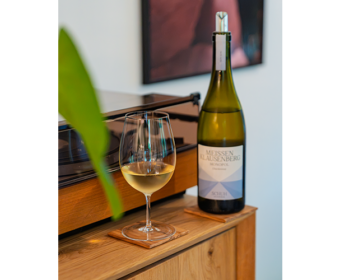
Unbottled – A Burgundy Tasting
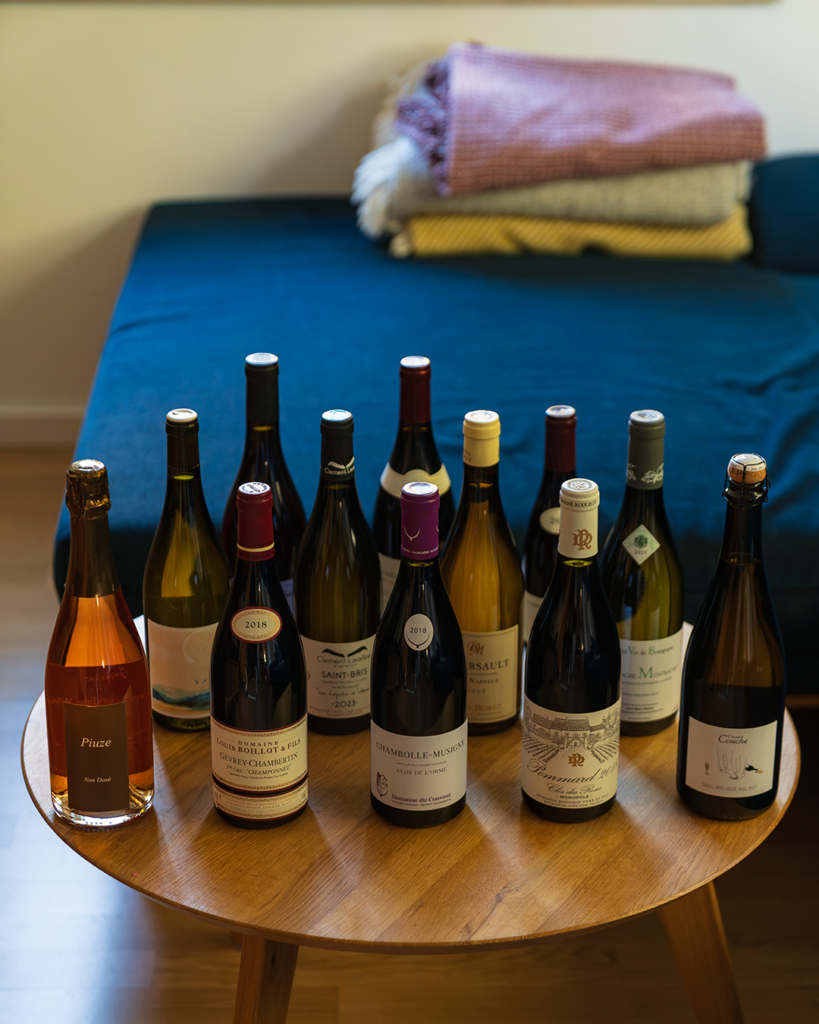
Burgundy has an almost mythical status among wine enthusiasts. Obviously, this is on the one hand due to the fact that it produces the world’s most expensive wines. On the other hand, it also inspires winemakers all over the world.
Naturally, we had to include this wine region in our wine regulars table. The focus was mainly on Pinot Noir from the 2018 vintage, as well as Chardonnay and other white varieties. It is, of course, impossible to cover every aspect of such a large wine-making area in one evening. Furthermore, we have already tried wines from the Mâconnais and Chablis subregions in previous tastings.
Sparkling aperitif
We started with a crémant from Patrick Piuze as an aperitif. This Négociant winemaker is best known for his Chablis, but this sparkling wine is produced at his second winery in Tonnerre. Patrick usually only produces white wines, but this is an exception with a hint of colour. Made from 100% Pinot Noir grapes, the wine ferments in stainless steel and spends 12 months on the yeast in the bottle.
The sparkling rosé had a noticeable and refreshing carbonation. It showed a blend of red fruits and honey with hints of spice and green apple. With its medium-long aftertaste, the Piuze Non Dosé was the straightforward aperitif I had hoped for.
Three reds
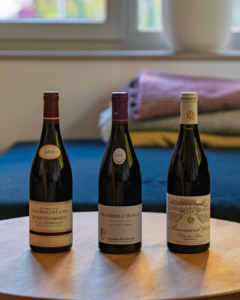
Next, we began a flight of pinots from famous villages in the Côte d’Or region. We started with a Gevrey-Chambertin from Louis Boillot et Fils. The grapes come from the Premier Cru Champonnet plot. Following destemming and cold maceration, the wine is left on the skins for up to three weeks before ageing for 15 to 18 months in French oak barriques, with less than 30% new oak.
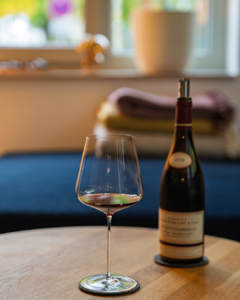
The Champonnet was an elegant Pinot Noir with notes of sour and dark cherries, forest floor and dark berries. The tannins were noticeable but well-integrated, giving it a fine-grained texture. On top of that, a hint of chalk emerged in the aftertaste.
For direct comparison, we tasted the Chambolle-Musigny Clos de l’Orme from Domaine du Couvent. Winemaker Philippe Chéron macerates the grapes with 30 % to 50 % whole clusters in concrete vats. After gentle pressing the wine spends 16 months in Piéce barrels with a new oak ratio between 15 % and 20 %.
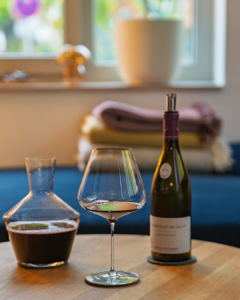
Instantly, the Clos de l’Orme featured some umami notes, which reminded me of red parpika and others of beetroots. There were also hints of dark cherries and berries, but the taste was dominated by tannins, which started off soft but built up more and more. Besides a meaty flavour, I detected notes reminiscent of clay.
The last wine in this flight was a Pommard from the Clos des Roses monopoly vineyard by Rougeot Père & Fils. Up to 90 % whole clusters are used in combination with a three-week maceration process. The wine is then aged in barriques for 18 months.
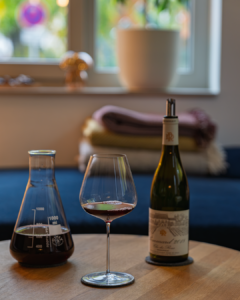
The last wine in the first red wine flight was by far my favourite, and it was also highly praised by the other tasters. Yes, it had some meaty qualities and noticeable tannins. Overall, however, the impression was of a balanced and complex Pinot Noir. I especially enjoyed the combination of lighter fruit notes and acidity. Of the reds, this was the champion in terms of value for money.
And now white
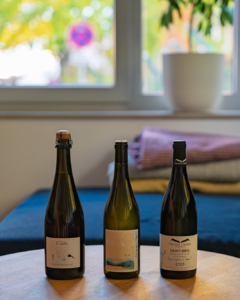
As a refreshment in the middle of the tasting, we had the Voulez-vous Couche avec Moi? from Vincent Couche. He is best known for his champagnes, but he also produces crémant using grapes grown in vineyards belonging to a 1000-year-old monastery in the north-east of Burgundy. As with his champagnes, no sulphur is added during the production of this sparkling wine.
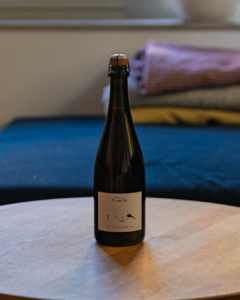
The Voulez-vous Couche avec Moi? was very well received by all the tasters. Although it is supposed to taste fresher than champagne, the differences are minor. I detected notes of red fruits, yeast, honey and pink grapefruit. Considering the price, I would definitely recommend buying this wine!
We started the white wines of the tasting with an Aligoté from Chaume de Lies. The relatively new estate only started in 2021. The 2023 Les Genouvrées was made using biodynamic farming methods, with the grapes being pressed whole and then aged in old, large oak barrels for 12 months.
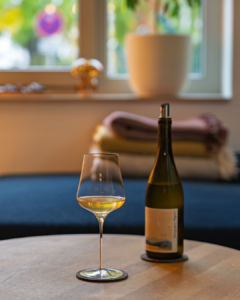
The Aligoté divided opinion in the tasting group. While I enjoyed it more than any of the other white wines, others were not so keen. I suppose this may be due to the pronounced acidity of the Les Chaumes des Lies. Despite the intense fruit flavour in the aroma, the taste was very minimalistic. I tasted mandarin peel, sour apples and apple skins, as well as a pronounced minerality.
Next was a curiosity from Burgundy: Saint Bris is the only subregion where sauvignon blanc is officially permitted. In this case, we tried the Les Copains d’Abord from Clément Lavallée. Only 40 % to 50 % of each pressing is used for their own wine. After spontaneous fermentation in stainless steel, the wine aged in 350 l used oak casks for 11 months.
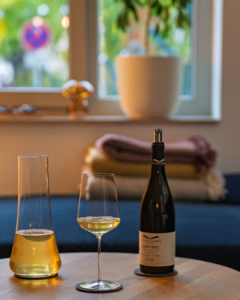
The Saint Bris was quite closed off when I first opened the bottle. However, after decanting, it opened up to reveal green fruits and a touch of gooseberry with hints of reductive notes. On tasting, the fruit notes took a back seat to reveal hints of green apples, lime juice and grape kernels.
Two chardonnays
I know the order of the pictures is different. However, after my initial tasting, I swapped the two Chardonnays and opened the rosé last.
After sampling two underrated varieties, we moved on to the more well-known Burgundian chardonnay. The 2023 vintage of Marc Morey’s Chassagne-Montrachet ferments in stainless steel tanks with natural yeasts. Afterwards, the wine is transferred to barriques with up to 25 % new oak for ageing on the lees with some battonage for up to 10 months. Finally, the wine is clarified and lightly filtered.
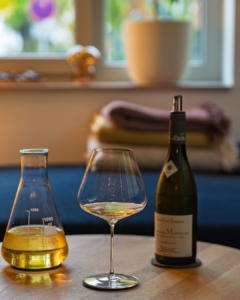
The first chardonnay in this tasting was rather reserved when first opened, but developed remarkably well. I detected notes of white fruits combined with a hint of exotic fruits and umami. The taste had a hint of acidity reminiscent of green apples, as well as oak spices. The mouthfeel was creamy without being overwhelming. Overall, it was the highest-rated white wine in the tasting.
The contrasting Meursault Les Narvaux is produced by Négociant David Moret. He uses whole-cluster pressing and ages the wine in barriques for 12 months, with up to 20 % new oak. The Chardonnay also spends some time in stainless steel before bottling.
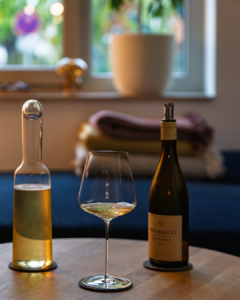
Personally, I preferred the Les Narvaux to the previous one. It had more intense fruit notes, leaning towards exotic fruits and gooseberries. Nevertheless, there was enough acidity in the taste to balance those primary flavours, with hints of citrus and lemon. Towards the end, a clear minerality emerged, reminding me of chalk.
The best at the end
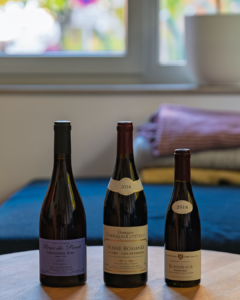
For the final red wine tasting, we tried two wines from Vosne-Romanée and an adjacent vineyard. The first was the Premier Cru Les Suchots from Domaine Confuron-Cotetidot. The grapes are left to macerate as whole clusters for up to 23 days. After spontaneous fermentation, the wine aged in barriques for 22 months, around 30 % of which were new oak barrels..
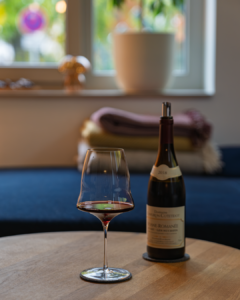
The Les Suchots offers a lot: It has pronounced notes of sweet cherries and dark berries, as well as an intense yet integrated tannic structure. It has a clear meaty flavour and notes of oak spice. The fruitiness of the wine is almost reminiscent of cherry liqueur. While the wine was well received, the fruit was a little too ripe for my liking.
The highlight of the tasting was the Grand Cru from the Echézeaux vineyard. Domaine Forey uses around 70% whole clusters and carries out a cold maceration for three to four days. The grapes are then macerated for a further three to four weeks. The wine is then aged in barriques with up to 50 % new oak for 14 to 20 months.
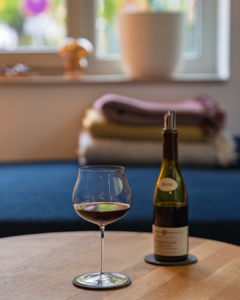
Once again, the Echézeaux was a wine that improved with some air. Initially, it had notes of ripe and dark cherries, vanilla and spices. However, a certain minerality also came through on the palate. The tannins appeared after a short while, becoming increasingly intense with a dusty quality. I detected some menthol notes towards the aftertaste, which led into an extremely long finish. Overall, this was the highest-rated red wine in the tasting.
Last but not least, we finished with the Fleur de Pinot rosé from Sylvain Pataille. This rather unusual Burgundian wine is made mainly from pinot noir grapes, with some pinot gris grapes added to the mix. Fifty per cent of the grapes are pressed directly, while the other fifty per cent of the whole clusters spend up to forty-eight hours on the skins. It is aged in Demi-Muids and a 5000 l fuder for up to 24 months.
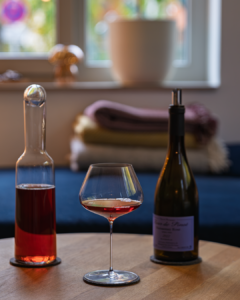
The Fleur de Pinot pleased everyone at the tasting, while simultaneously showing great complexity. The aroma began with notes of redcurrant, raspberry and slight lactic notes. This fruitiness was soon accompanied by a hint of chalky minerals. I also detected ripe red apples, sour cherries and hibiscus. I was glad that I presented this wine last, as it was the highest-rated wine in the tasting.