Unbottled – Two Moric Blaufraenkisch
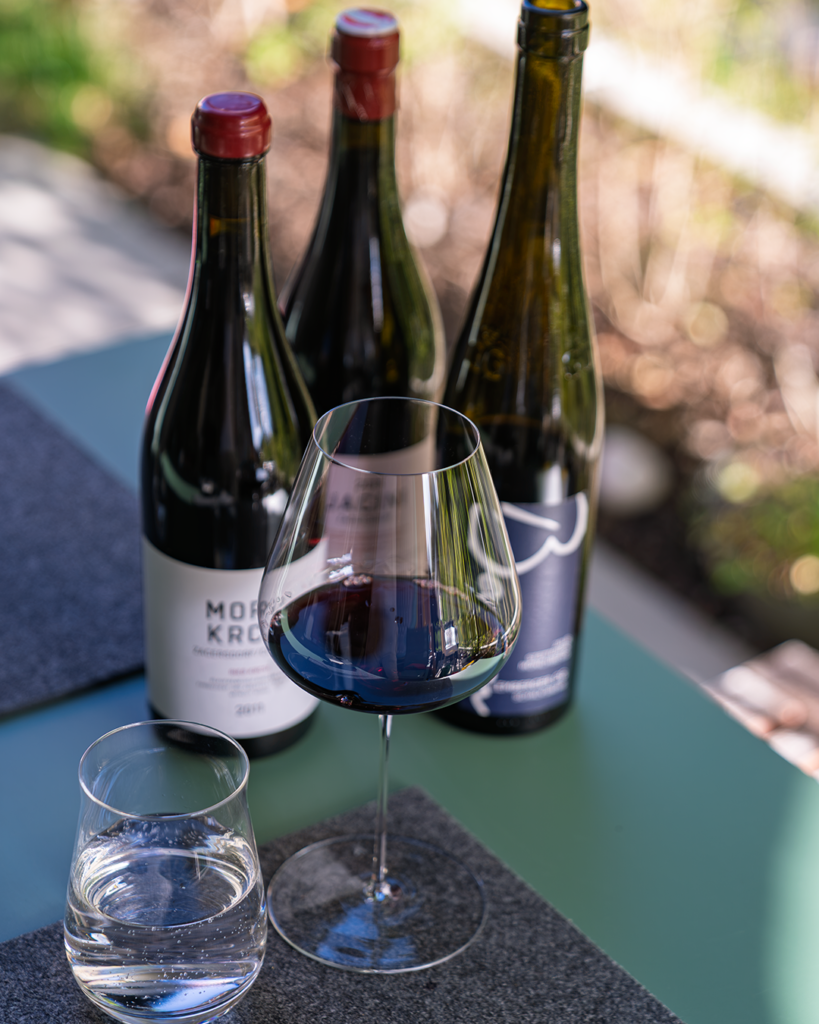
I discovered the Moric Jagini through the Wein fuer Wein podcast and their interview with Hannes Schuster. Luckily, I managed to get my hands on the 2011 vintage. The second wine was the Moric Zagersdorf / Cogrštof Ried Krčsi 2011. I chose this wine, because it was the same vintage as the Jagini.
Powerful Blaufraenkisch
Roland Velich and Hannes Schuster use grapes from 55- to 100-year-old vines in Zagersdorf for the Jagini. After three weeks of maceration, the wine is aged in untoasted Austrian and German oak casks for 48 months.
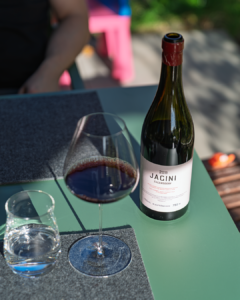
The Jagini is a powerful wine with a touch of aged notes which I associated with marzipan. There is also a typical Blaufränkisch ‘rural’ note. Yet the wine is still fruity, with enough acidity. I detected slight cherry liqueur and spice notes. Overall, I enjoyed it quite much.
More delicate notes
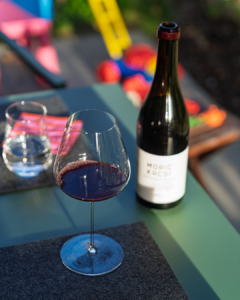
The grapes for the Cogrštof Ried Krčsi grow on a Hungarian vineyard near Zagersdorf. In this case, the grapes were left to macerate on the skins for three weeks, too. Additionally, the wine ages for 36 months in 500 l barrels.
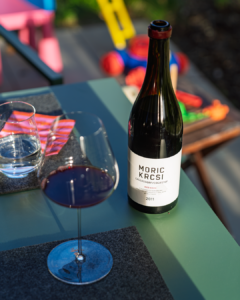
In direct comparison, the Krčsi comes across as cooler and more delicate. Initially, I detected hints of hay and herbs in the aroma. The taste is a combination of sour cherries and umami, with a hint of volatile notes. Finally, the aftertaste reveals a certain earthiness, as well as smooth tannins.
In conclusion
In conclusion, the Jagini gives you a mouthful of wine, whereas the Krčsi requires your undivided attention to pick up on the finer notes. Both wines are excellent, but personally, I prefer the latter, although the Jagini will be more popular with a lot of people!
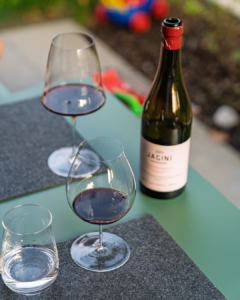
We also tried two other glasses, the Josephinenhütte No. 3 and the Lobmeyr Ballerina Red Wine Tasting glass. Both worked very well with the Jagini. The first one, showed a more rounded sipping experience. In the Lobmeyr the wine showed all of its power. The X Wine Glass delivered the most neutral flavour.