Unbottled – A Blaufraenkisch Tasting
Yes, I do enjoy pinot noir, but my favourite red variety is Blaufraenkisch. The reason for that is that I have a very personal connection to the variety, the Burgenland and the Heinrich vineyard in particular. I remember playing with leftover wine labels as a child.
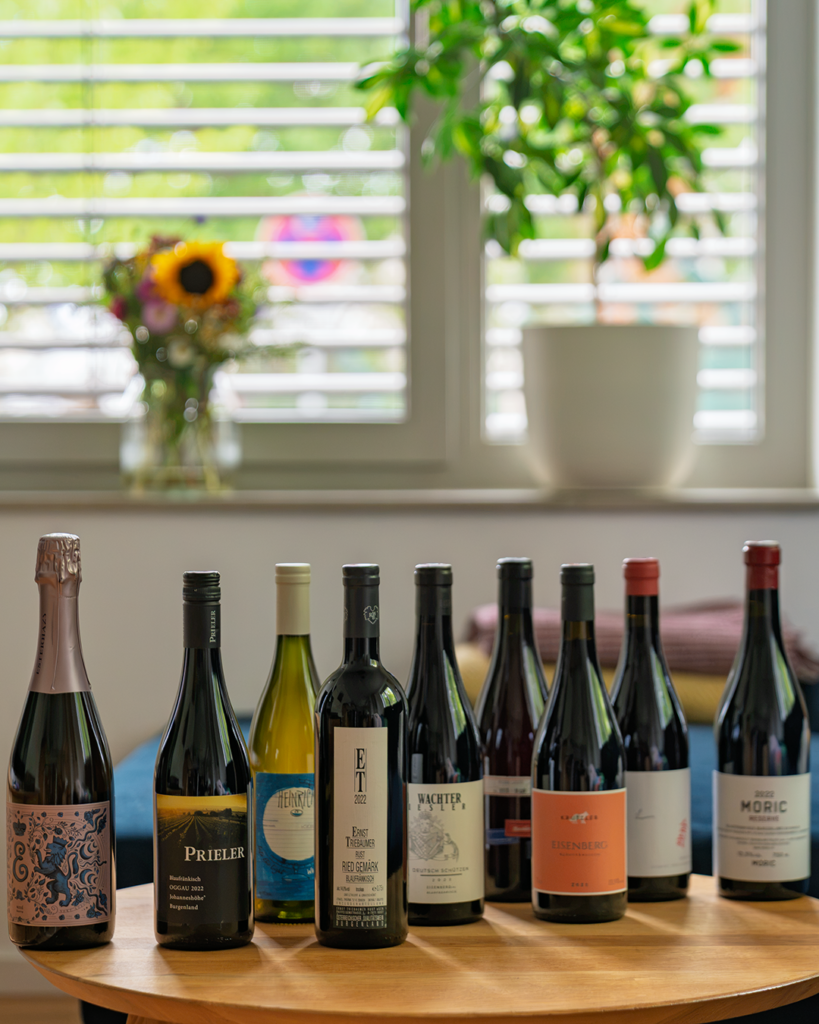
In this case, I curated nine different wines made from the variety to demonstrate the variety’s versatility. The selection included a Blanc de Noirs, rosés and, of course, red wines. Most of the reds were from the 2022 vintage, meaning they still have many years of ageing potential ahead of them.
Lovely start
We started with the 2023 Esterhazy Austria Reserve Rosé Brut. Esterhazy uses Blaufraenkisch to make three different sparkling wines. For the Reserve Rosé, they use whole-cluster pressing and spontaneous fermentation in stainless steel tanks. The wine is left on the yeast in the bottle for 24 months.
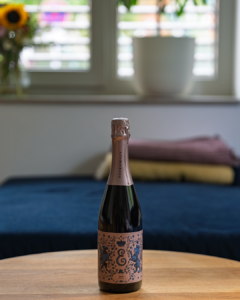
The Rosé Brut began with clear red fruit notes. There maybe was a touch of yeast, but the overall impression was overwhelmingly fruit-driven, with notes of red berries, red apples and citrus. The sparkling wine was therefore the perfect aperitif and universally well received.
The beginning
Next, we tried the Oggau Johanneshoehe Blaufraenkisch from Prieler. The grapes come from nine different plots around Oggau with younger wines. They then spend 14 days on their whole clusters with temperature control before pressing and ageing in large oak barrels for 28 months.
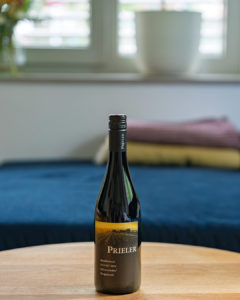
The Johanneshoehe began with the aroma of dark red fruits, ranging from sweet to sour cherries. There was also the slightest hint of volatile notes and spices. Towards the end, I detected some minerals. Considering the price, this was the best value for money!
I opened the Triebaumer Gmaerk in direct comparison to the Johanneshoehe. Triebaumer grow their grapes according to biodynamic principles. After a cold maceration, the grapes ferment with natural yeasts and age for six months in 300 l barrels, followed by a further 16 months in large oak barrels.
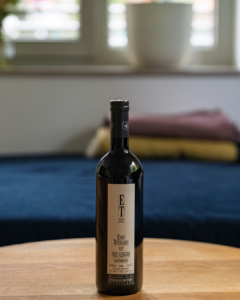
The Triebaumer did start with more volatility. In the aroma, I found a bit darker fruits, but the taste had a pronounced acidity with noticeable tannins. On top of that, I also detected citrus notes and spices. While the Prieler was the crowd pleaser, this was more complex, but also polarized the tasters.
A white refresher
As a short interlude between flights, I opened the Heinrich Into the Light 2023. After an early harvest, the whole clusters are pressed without sedimentation. Spontaneous fermentation and ageing take place in large oak casks as well as amphoras. Heinrich does not add any sulphur to the wine.
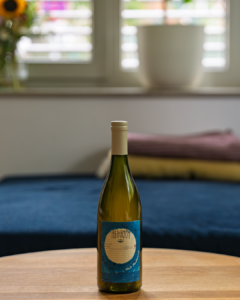
The Into the Light did exactly what I wanted: It provided a refreshing change to the tasting experience. However, some loved the combination of reductive notes and yeast, while others did not. I did enjoy the combination with just a touch of green apples and gooseberries in the taste.
Village level
The next flight compared two village wines from the Eisenberg subregion. First we tasted the Deutsch-Schuetzen from Wachter-Wiesler. After a maceration of 22 days, the wine ages in 1500 l Fuder barrels for 30 months.
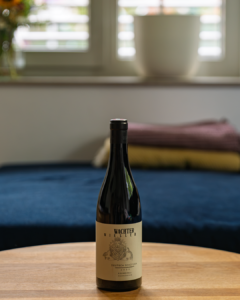
The Wachter Wiesler then again provided a more comfortable drinking experience. It began with notes of bright red fruits, rose petals and liquorice root, as well as some balsamic flavours. I especially enjoyed the lingering red fruit and berries in the aftertaste.
The Eisenberg (the village, not the subregion) village bottling from Krutzler was next. They use destemmed grapes and macerate them for 12 days. After a gentle pressing in a basket press, the wine ages for 25 months in large oak casks, followed by 500 l casks.
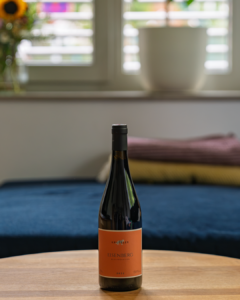
It is always fascinating to try a wine from schist soil, as it lends a certain smokiness to the taste. Apart from that, I tasted a mix of wild berries with the Krutzler. The tannins were quite pronounced with a sandy texture, but will mellow over time.
Another rosé
Next up was a 2020 Blaufraenkisch rosé from Lichtenberger-González. The grapes were harvested when fully ripe, and only the free-run juice was used to make the wine. Whole clusters were then added to the barrels and the wine was aged in 500 l casks.
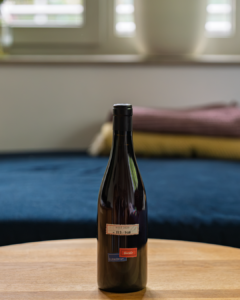
This was one of the highlights of the tasting for me, and it was universally well received. The rosé offered a beautiful blend of wild berries, hibiscus and red fruit tea, with hints of herbs. I could even detect hints of fresh vanilla alongside the citrus. I also understand why the wine is now called “Rosado”.
The final round
The last flight featured two unconventional reds. The first was the Bonsai from Claus Preisinger from the 2024 vintage. Claus uses only three days of skin contact for his grapes grown as goblets. After pressing the wine spends eight months in 1000 l barrels.
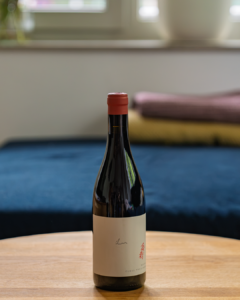
For me, at least, the Bonsai came in a close third place, right after the Lichtenberger & González. It had similar red berry characteristics. I also picked up notes of black tea and hibiscus, as well as the slightest hint of tannins. However, this atypical flavour was loved by some, but not by all.
The final wine in the tasting was the Moric Reserve. The grapes come from Lutzmannsburg and Neckenmark and spend 21 days with 15 % whole clusters on their skins. Ageing is done for 20 months in 500 l and 1000 l barrels.
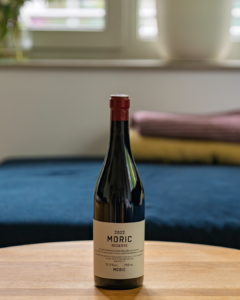
Unsurprisingly, the Moric Reserve was the highest rated wine in the tasting. It was simply the most complex of them all. It began with notes of wild berries and sweet cherries, followed by a hint of glue. Soon afterwards, smooth tannins came through, accompanied by dark cherries, vanilla and spices. However, the wine still had enough acidity to offset the more placative flavours. The tannins reappeared towards the end, providing an extremely long finish.
*The fact that I received a product reviewed in this article for free, did not – in any way – influence the rating of said product. I received the Brut Rosé for free from Esterhazy.