An Irish Whiskey Tasting
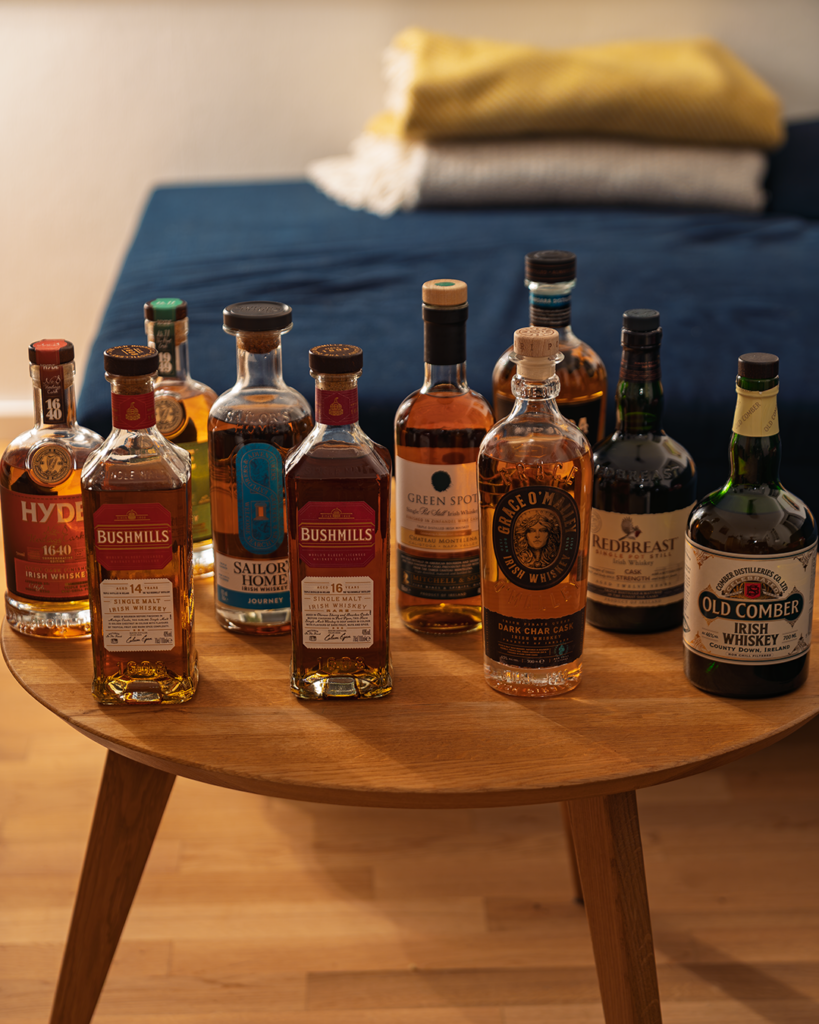
As I mentioned in my posts in the lead-up to St. Patrick’s Day, I didn’t have a single bottle of Irish whiskey at home. To remedy this, I decided to compare ten different bottles. Fortunately, I had no trouble assembling a small tasting panel.

Refined and aged
We started with a selection of Bushmills Single Malts. I would usually not start with the oldest whiskey in the tasting, but I have found on more than one occasion that the more delicate notes of this excellent single malt tend to get lost if you try something stronger first. The first bottle was the 14 Year Old, which I have already featured in a separate article. This triple-distilled whiskey, made from unpeated Irish barley, is first matured in ex-bourbon barrels, then finished in Malaga sweet wine casks for up to twelve months.
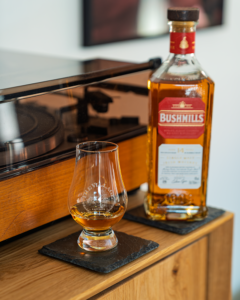
It was the perfect choice of Irish whiskey to begin with. It opened with mellow malt notes and a pronounced sweetness that some tasters associated with honey. Everyone agreed that it was an enjoyable whiskey to sip. Once again, I liked the combination of spicy notes with grain, and the subtle influence of sweet wine.
By contrast, the 16 Year Old Bushmills ages in a combination of ex-bourbon and Oloroso sherry casks, and then spends up to a year in port pipes for a finishing touch. Like its younger sibling, the port-finished version is bottled at 40% ABV.
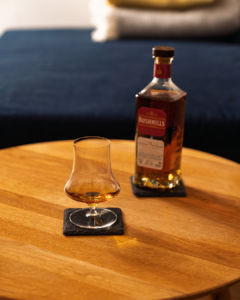
It was interesting to see the contrast in the 16 Year Old’s flavour profile resulting from different cask management. The sherry cask influence was instantly noticeable, with a combination of dried fruits, pronounced oak spices and a touch of tannins. I could even detect a whiff of ester notes. This shouldn’t detract from the fact that the whisky was one of the favourites of the tasting session.
The usual start
Next, we moved on to the blended Irish whiskey category with the Grace O’Malley Dark Char Cask. This whiskey is sourced from the Great Northern Distillery. It consists of around 40 % double-distilled malt, 6 % triple-distilled malt whisky, and the rest is grain whisky. Although it has no age statement, rumour has it that it contains some 10-year-old whiskey.
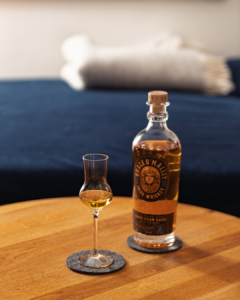
The Grace O’Malley has a strong corn whiskey flavour. Apart from that, you can detect hints of grain and spice in both the aroma and the taste. After a while, a buttery flavour emerges, accompanied by hints of charcoal, clearly showing the influence of the heavily charred ex-bourbon casks. I will certainly give this one a try in cocktails, too.
Old Comber Whiskey is the blended and pot still whiskey range produced by the Echlinville Distillery. While the exact ingredients of Old Comber Blended Irish Whiskey remain a secret, Echlinville does grow its own grain on its farm. This whiskey is a blend of ex-bourbon barrel whiskey finished in port and sherry casks.
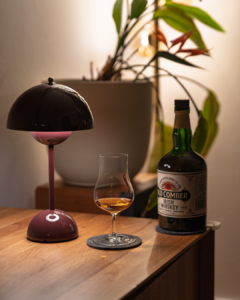
The Old Comber begins with an oily sensation, reminiscent of linseed oil. After a while, these notes settle into a combination of cereal, spice, caramel and butter. Overall, this combination reminds me of a biscuit. Especially the beginning, made the whisky a bit polarising.
Complex blends
Hyde uses a blend of four-year-old whiskey, with 75 % being grain whiskey and the remaining 25 % triple distilled malt whiskey. It is aged in first-fill ex-bourbon casks, as well as first-fill Oloroso sherry casks. Finally, the whisky is finished in stout casks from the Cotton Ball craft brewery.
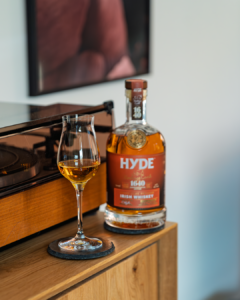
Initially, the Hyde stout cask features spice notes, followed by a fruity character. I also detected a flavour of sprouted barley, which I associate with stout. As it finishes, the Hyde develops an almost grape-marc-like quality. This way it delivers quite much for the price tag.
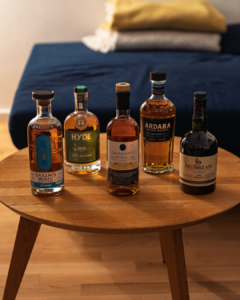
I also featured the Sailor’s Home Journey Blended Irish Whiskey separately in another article. It is made using four-year-old whiskey sourced from the Great Northern Distillery. The grain whisky begins ageing in new American oak barrels before being transferred to ex-bourbon barrels. The triple-distilled malt whiskey, on the other hand, ages exclusively in ex-bourbon casks. The two types of whiskey are then blended and finished in Jamaican rum barrels for around six months.
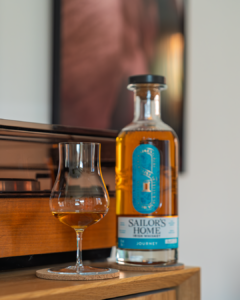
The Sailor’s Home starts with a combination of spicy oak notes and caramel as well as rum flavours that won over many of the tasters. They were surprised by the sip’s complexity and the combination of barrels, which resulted in a balanced dram. Overall, The Journey offered the best value for money in this tasting.
Single Pot Still
Next, we tried the Green Spot Chateau Montelena Single Pot Still whiskey from Midleton, the most famous distillery in Ireland. Still under the stewardship of the Mitchell family, the whiskey spends seven to ten years in ex-bourbon and Oloroso sherry casks. It then gets a finish in Zinfandel barrels from the Napa Valley.
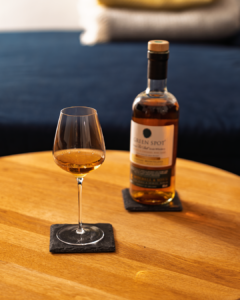
This Single Pot Still whiskey received the second-highest rating in the tasting. It begins with a blend of grain and corn, but spicy flavours soon take over. Next, buttery notes emerge, followed by the influence of the fortified wine casks. Sherry fruits are accompanied by darker red berries and grape notes, which I associate with the wine casks. Overall, this is an excellent Irish whiskey and my favourite of the Green Spot bottlings.
The second whiskey from the Midleton Distillery we tried was the Redbreast 12-Year-Old Cask Strength. After triple distillation on pot-stills, the whiskey spends twelve years in a combination of ex-bourbon and Oloroso sherry casks. This version is bottled at casks strength of 57,2 % ABV.
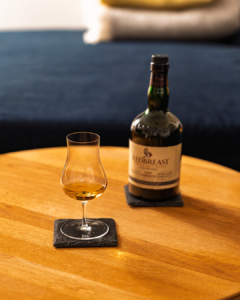
In short, this was the overall winner of the tasting. It was enjoyed by everyone, including the tasters who usually do not enjoy cask-strength bottlings. For me the Redbreast started with a lot of oak spices and dried fruits, but soon was accompanied by malt, perfumed notes, as well as a certain grassy flavour. I noticed distinct gooseberry flavours as well as some tannins on the palate. This is definitely a complex bottling which showcases the full potential of Irish whiskey.
The peated ones
The final flight of the evening featured peated single malts. First up was the Hyde Peated Single Malt, distilled from peated Irish barley. The whiskey spends eight years in first-fill charred bourbon barrels in a warehouse from Hyde. Ultimately, it is bottled without chill-filtration or colouring.
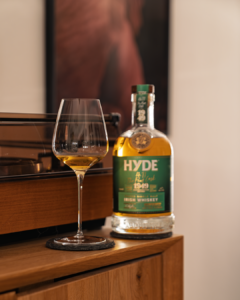
Obviously, you instantly taste the smoke. The Hyde Peated starts with some wet smoke notes which are very well integrated and lean towards campfire smoke after a while. Behind the smoke, you can find a soft and balanced single malt with notes of caramel, vanilla and oak spices.
The last Irish whiskey we tried came from the Ardara Distillery in County Donegal. Master Distiller Graeme Bell produces the single malt using heavily peated Irish barley with peat from their own bog. Another unique feature is their use of the ‘all grain in’ principle. This means that all the grain is added to the wash still.
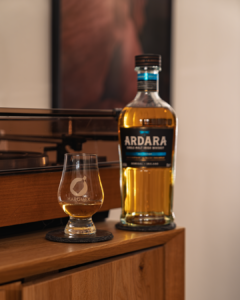
The Ardara 2025 Edition tastes unlike any whiskey I have tried before. In addition to a certain smokiness, there are hints of burned rubber and glue, reminiscent of a Mexican mezcal. Beneath those intense aromas, there is a spicy note that reminds me of chilli and black pepper. Due to its unique flavour profile, tasters either loved this single malt or did not enjoy it at all.
*The fact that I received a product reviewed in this article for free, did not – in any way – influence the rating of said product. I received the whiskeys for free from the German importers.